 Skip to content




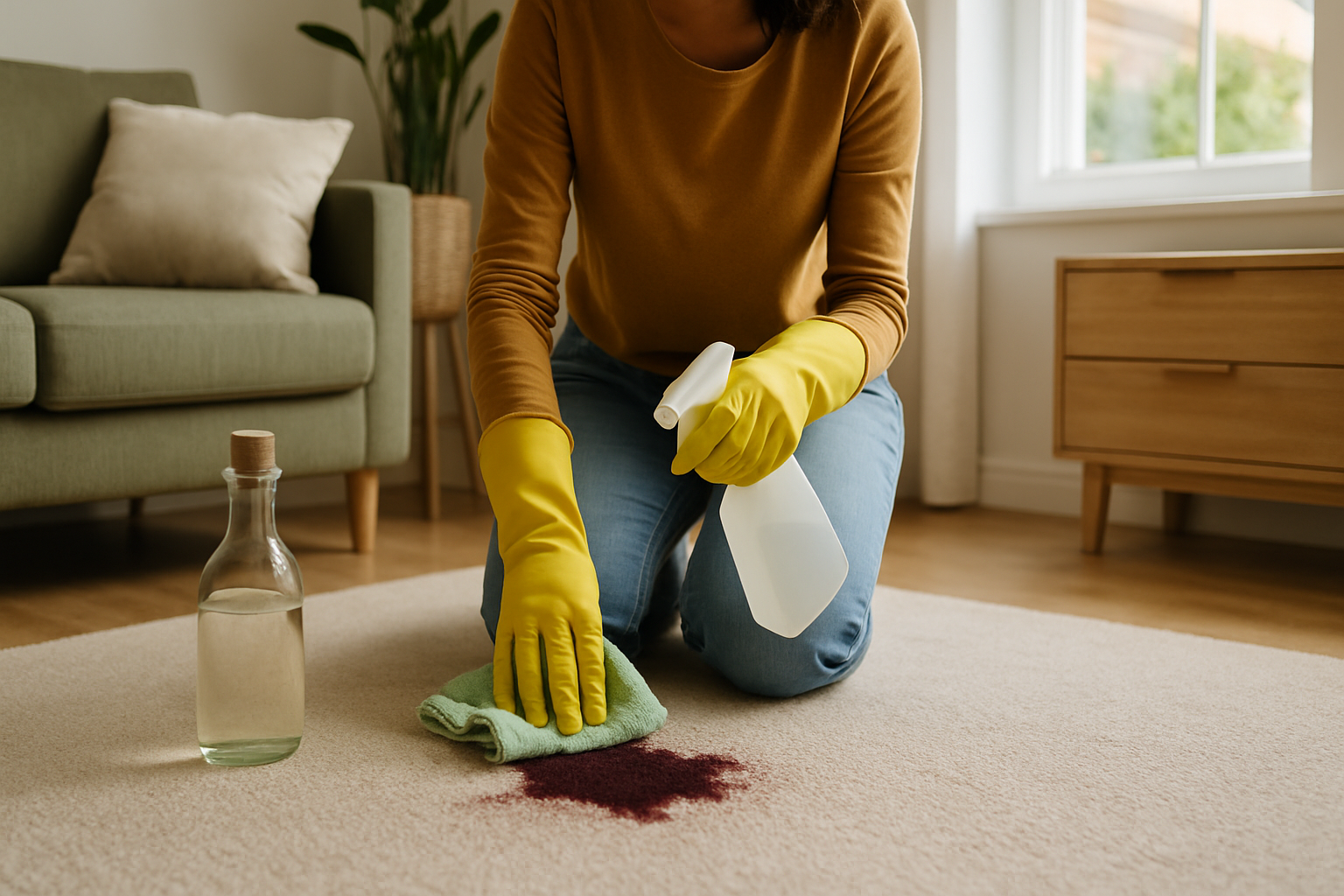
How to Remove Red Wine Stains from Carpet
Quick Answer: To remove a red wine stain from carpet, blot (never rub) immediately with a clean white cloth, then apply a solution of one tablespoon washing-up liquid and one tablespoon white vinegar in two cups of warm water. Blot repeatedly until the colour lifts. Fresh spills clear in 10–20 minutes; dried marks often need professional hot-water extraction. In Essex, professional single-stain treatment costs roughly £45–£90 [Source: Bansal’s Cleaning service data 2026].
Red wine on a cream carpet is one of the most dreaded household accidents. However, the panic is usually worse than the mark itself. Act fast, use the right approach, and most spills lift cleanly.
This guide walks you through fresh spills, dried-in marks, and the point where a professional saves your carpet. The advice here comes from real call-outs across Basildon, Chelmsford and Romford every week.
Why red wine stains so badly
Red wine is a tannin-based stain, meaning the colour comes from natural plant pigments that bond quickly to carpet fibres. Wool and natural fibres absorb it fastest. Therefore, heritage homes around Brentwood suffer worst.
Tannins are the same compounds that make tea and coffee stubborn. Consequently, the same blotting principles apply across all three drinks.
Importantly, heat sets the dye. Never use hot water on a fresh spill. Likewise, never put a stained rug in a tumble dryer.
What you need before you start
Speed matters more than fancy products. Therefore, grab these basics from your kitchen:
- Several clean white cloths or kitchen roll
- Cold water
- Washing-up liquid
- White vinegar
- Bicarbonate of soda
- A spray bottle (optional but handy)
- Rubber gloves
Bicarbonate of soda is a mild alkaline powder that absorbs moisture and lifts loosened pigment. Specifically, it works as a finishing step, not a first response.
Notably, always test any solution on a hidden patch first. Some older carpets bleed colour when wet. This quick check prevents an expensive mistake.
Step-by-step: removing a fresh red wine stain
Follow these steps in order. Importantly, do not skip the blotting.
- Blot immediately. Press a clean white cloth onto the spill. Lift, fold to a dry section, and repeat. Never rub — rubbing spreads the pigment outward.
- Apply cold water. Pour a little cold water onto the mark to dilute it. Blot again straight away.
- Mix your solution. Combine one tablespoon washing-up liquid, one tablespoon white vinegar and two cups of warm water.
- Dab the solution in. Work from the edge inward. Therefore, it stops spreading.
- Blot, rinse, repeat. Alternate solution and clean water. Be patient — five or six rounds is normal.
- Finish with bicarb. Sprinkle bicarbonate of soda over the damp area. Leave it 10 minutes, then vacuum.
White vinegar is a mild acid that neutralises the tannin and helps release the pigment. In addition, it deodorises, which matters if the wine has soaked into underlay.
Fresh spills respond far better than dried ones. Even a full glass spilled across a hallway runner can usually be dealt with by blotting the liquid out straight away and then applying the acidic solution set out in this guide, and a fresh mark will often lift with a single treatment.
How do you remove a dried red wine stain?
Dried marks are tougher, but rarely hopeless. However, the dye has bonded, so you must re-wet and loosen it first.
Start by spraying the area with cold water until damp. Then apply the same vinegar and detergent blend. Let it sit for five minutes — longer than you would for a wet spill.
Blot firmly with a white cloth. After that, repeat the wet-and-blot cycle several times. Each pass should pull a little more colour out.
For really stubborn marks, a 3% hydrogen peroxide solution can help on light carpets. However, peroxide can bleach colour. Therefore, test it on a hidden corner first and rinse thoroughly.
A dried red wine mark is still worth treating rather than writing off. Professional hot-water extraction can often lift older stains that home methods have failed to shift, so tenants facing a check-out inspection are usually better off arranging treatment before the inventory check than assuming a deposit deduction is unavoidable.
What to avoid
Some popular “hacks” make things worse. Specifically, avoid the following:
- Bleach. It strips carpet colour and damages fibres.
- Hot water on fresh spills. Heat sets the dye permanently.
- Scrubbing hard. This pushes wine deeper and frays the pile.
- Coloured cloths. Dye from the cloth can transfer to wet carpet.
- Too much liquid. Soaking the underlay invites mould and odour.
Hydrogen peroxide is a gentle oxidising bleach safe for many light carpets, but never for dark or patterned ones. Therefore, when unsure, leave it alone.
Home method vs professional cleaning
The table below shows when DIY is enough and when a pro pays off.
| Factor | DIY home method | Professional clean |
|---|---|---|
| Stain age | Fresh, under 1 hour | Dried or set in |
| Carpet type | Synthetic, hard-wearing | Wool, silk, antique |
| Coverage | Small splash | Large or repeated spill |
| Underlay soaking | Surface only | Soaked through |
| Equipment | Cloths and household items | Hot-water extraction |
| Typical cost | £0–£10 | £45–£90 per stain |
| Risk of damage | Higher if rushed | Low, fully insured |
Hot-water extraction is a professional method that injects heated solution deep into the pile. Then it vacuums back out the dissolved residue. Notably, it reaches dye that surface blotting cannot.
In addition, we carry pH-balanced products matched to your carpet fibre. That removes the guesswork — and the risk.
When should you call a professional?
Call a pro if the mark has dried, covers a large area, or sits on wool or silk. Likewise, ring us if your home methods have failed already, because over-treating can set the colour harder.
For tenants, a professional clean often protects your deposit. Notably, many Essex tenancy agreements require professional carpet cleaning at check-out [Source: TDS Tenant Fees guidance]. Therefore, a documented clean gives you proof for the inventory check.
We are an NHS Approved Supplier for several Essex hospitals, including Southend, Basildon and Broomfield. That accreditation means our methods and products meet strict hygiene and safety standards. Therefore, you get hospital-grade care in your living room.
In addition, our cleaners are DBS-checked, so you can trust who enters your home. We also carry £10M public liability insurance, which covers your carpet in the rare event of a problem.
If you want to understand the wider process, our carpet cleaning service page explains our extraction method in full. For tenants approaching a move, our end of tenancy cleaning guide is worth a read.
A quick stain-response checklist
Keep this near your kitchen for the next spill:
- Stay calm and grab a white cloth
- Blot — never rub
- Dilute with cold water
- Apply the vinegar and detergent mix
- Blot from the outside in
- Rinse with clean water
- Finish with bicarbonate of soda
- Call a pro if colour remains after several rounds
It helps to keep this list somewhere easy to reach — printed and pinned up in the kitchen, for example — so anyone in a shared household can act the moment something is spilled. Where entertaining is likely, having the materials to hand and treating each spill as it happens gives the best chance of avoiding a permanent mark.
Caring for your carpet long term
A clean carpet lasts longer and looks better. Therefore, vacuum twice a week to stop grit grinding into the fibres. Grit is the abrasive dirt that wears pile down faster than any single accident.
In particular, treat spills immediately rather than “later”. Wine that sits overnight is far harder to lift.
In addition, consider an annual deep clean, especially in busy Essex family homes. Our domestic cleaning team can fold carpet care into a regular visit. Residents across our Basildon cleaning and Romford cleaning areas book seasonal refreshes.
For more spill-specific help, see our guides on removing coffee stains and pet stain and odour removal. Both rely on similar blotting principles.
Why fast action wins
Specifically, the first hour decides everything. A fresh wine spill sits on top of the fibre, not yet bonded. Therefore, blot it then and the colour lifts easily.
Once it dries, the tannin grips the fibre core. Consequently, results drop and you may need extraction.
We hold a 4.6★ rating across 242 Google reviews. Notably, “saved my carpet” appears again and again. Most of those wins came from customers who phoned within a day.
If you are unsure whether a mark is salvageable, send us a photo on WhatsApp. We will give you an honest answer — sometimes that answer is “you can do this yourself”.
Frequently asked questions
Does salt remove red wine from carpet?
Salt can absorb a fresh, wet spill if applied within minutes, but it does not remove the dye. After blotting and salting, you still need a cleaning solution to lift the colour. On dried stains, salt does nothing useful.
Can you remove a dried red wine stain?
Yes, though it is harder. Re-wet the area, apply a white vinegar and detergent solution, then blot repeatedly. Old or set stains often need professional hot-water extraction to fully clear the dye.
Will white wine remove red wine stains?
White wine can dilute a fresh red wine spill slightly, but it is not a real cleaner. Plain cold water works just as well and costs nothing. We do not recommend wasting wine on it.
How much does professional carpet stain removal cost in Essex?
Most single-room red wine stain treatments in Essex cost between £45 and £90, depending on carpet size and stain age. A full room clean typically ranges from £35 to £60 per room.
Does red wine stain permanently?
Red wine can stain permanently if left to dry into wool or set with heat. Acting within the first hour gives the best result. Even old stains often respond to professional extraction.
Is bleach safe on carpet wine stains?
No. Household bleach can strip carpet colour and damage fibres, leaving a worse mark than the wine. Stick to vinegar, washing-up liquid, or a dedicated carpet product instead.
Ready to rescue your carpet?
Don’t let a stubborn mark ruin your room — or your deposit. Our DBS-checked, fully insured team covers Basildon, Chelmsford, Romford, Brentwood and across East London.
Call us on 07424 330020 or message us on WhatsApp with a photo of the stain. We’ll tell you honestly whether to DIY or book a visit.
Reviewed by Sam Bansal, Operations Manager.
Sources
- https://bansalscleaning.com/carpet-cleaning/
- https://www.tenancydepositscheme.com/
- https://bansalscleaning.com/end-of-tenancy-cleaning/