 Skip to content




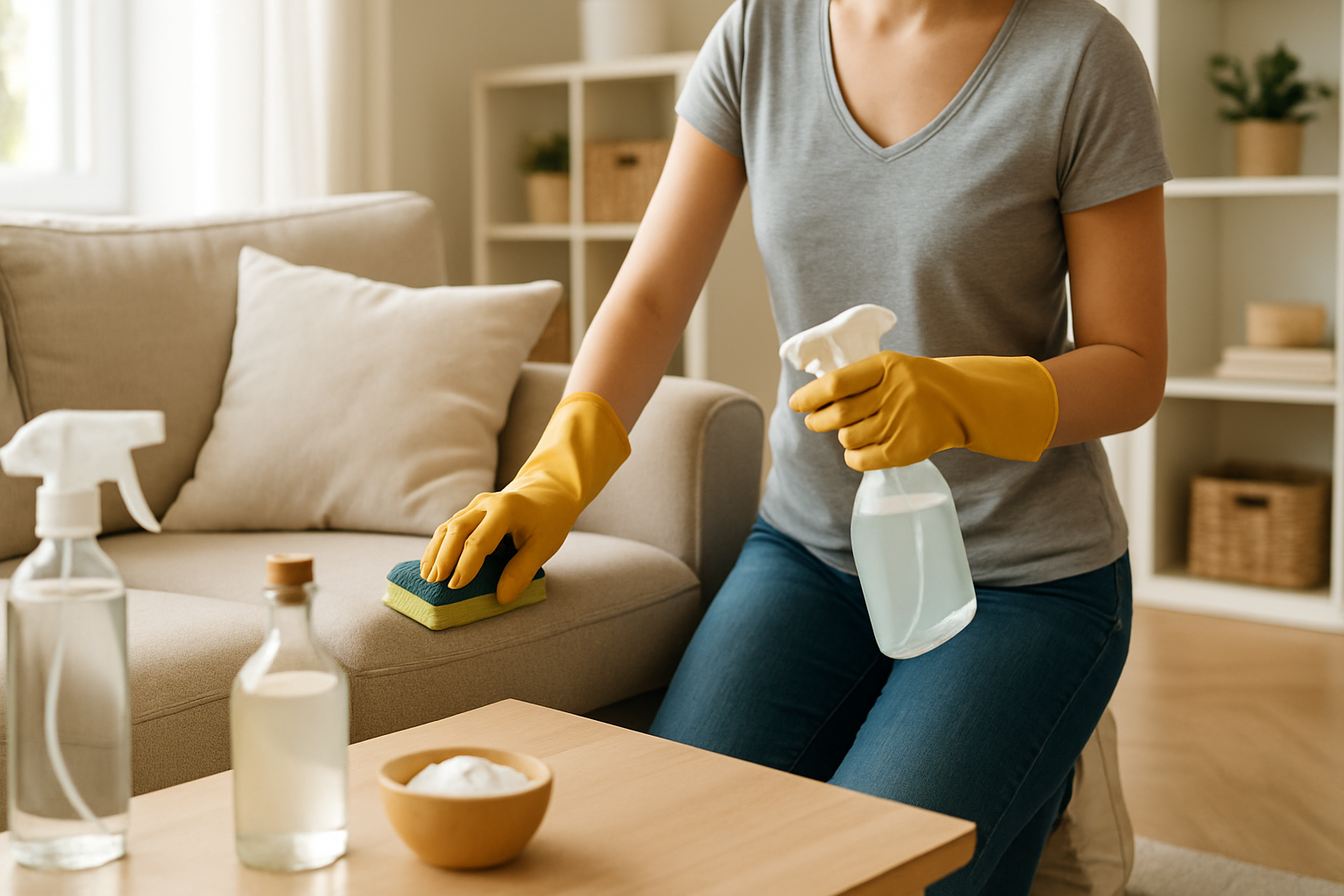
Eco-Friendly Upholstery Cleaning in East London
Quick Answer: Eco-friendly upholstery cleaning in East London uses plant-based, non-toxic solutions that are safe for children and pets, with sofas typically usable again within 2-4 hours. Prices range from £45 for an armchair to £120 for a large corner sofa, with a standard three-seater around £60-£75 in areas like Stratford, Ilford and Romford. Green methods use low-moisture extraction and enzyme treatments, avoiding harsh chemicals while removing stains, allergens and pet odours effectively.
Cleaning a sofa properly is harder than it looks. Get it wrong, and you’re left with damp foam, chemical smells, or watermarks that ruin the fabric. Get it right, however, and your furniture looks years younger.
This guide walks you through eco-friendly methods that protect your family and pets. In particular, we’ll cover what “green” actually means. Additionally, we’ll explain the costs and show you how to clean safely yourself.
Why choose eco-friendly upholstery cleaning?
Eco-friendly upholstery cleaning refers to refreshing fabric furniture using biodegradable, plant-based products instead of harsh solvents and synthetic detergents. The goal is a fresh sofa without residues that irritate skin or lungs.
Conventional cleaners often leave chemical films behind. Consequently, babies who crawl and pets who lick surfaces then pick these up.
Upholstery treated with supermarket foam sprays can hold detergent residue in the fabric and padding, because those products are applied with no rinse or extraction stage. The residue stays in contact with skin and can irritate sensitive skin, which is a common concern in homes with babies and young children. A plant-based hot water extraction clean is designed to rinse that residue out rather than layer more product on top of it.
Notably, UK product safety rules require ingredient transparency on labels. However, many DIY sprays still contain hidden irritants [Source: gov.uk Product Safety]. That gap between label and reality catches families out constantly.
What makes a cleaning product genuinely “green”?
Not every “natural” label is honest. Indeed, greenwashing is common across the market. Specifically, watch for these markers before you buy.
Biodegradable means the product breaks down naturally without polluting waterways. This matters locally, because East London drainage feeds the Thames and Lea catchments. Therefore, what you rinse away really does travel downstream.
VOC-free refers to formulas without volatile organic compounds. VOCs evaporate into the air and worsen asthma. Importantly, low-VOC sprays are far kinder to small lungs.
Enzyme-based describes a cleaner that uses natural proteins to digest stains. Notably, these proteins tackle food, grease and urine without any bleach.
Here’s a simple checklist for spotting a truly eco product:
- Ingredients listed in full on the label.
- Certified biodegradable (look for recognised logos).
- No synthetic fragrance or dye.
- pH-balanced for fabrics.
- Cruelty-free certification.
Green versus traditional cleaning — a comparison
Homeowners often ask whether green methods really match chemical ones. Honestly, the answer is yes, for the vast majority of everyday marks and spills. Across hundreds of Essex homes, the difference is barely noticeable on typical stains.
| Factor | Eco-Friendly Method | Traditional Chemical Method |
|---|---|---|
| Safe for kids/pets | Yes, within 2-4 hours | Often needs 24 hours |
| Stain removal | Excellent on food, grease, pet | Excellent |
| Odour neutralising | Enzyme-based, tackles source | Often masks only |
| Drying time | 2-4 hours (low moisture) | 4-8 hours |
| Fabric safety | Gentle, pH-balanced | Can fade delicate fabrics |
| Environmental impact | Low, biodegradable | Higher, VOC release |
| Cost | Comparable | Comparable |
As the table shows, the trade-offs are minimal. However, extremely old set-in stains may still need a specialist. Consequently, we’re always honest about that upfront.
Bleach-based products are often assumed to be the only thing that will shift a wine mark, but on cream and other pale upholstery they risk stripping the dye and leaving a permanent light patch where the stain was. An oxygen-based enzyme pre-treatment is usually the safer choice on light fabrics, as it works on the stain without bleaching the fibres, so the original colour is retained.
How to eco-clean your upholstery at home
You can manage a decent refresh yourself between professional visits. Meanwhile, follow these steps carefully.
Step 1: Check the care label
Every sofa carries a fabric code. W means water-based treatment is safe. S means solvent only. Meanwhile, WS allows both, and X means vacuum only.
Ignoring this code is the quickest route to a ruined sofa. Therefore, always inspect the tag before you spray anything.
Step 2: Vacuum thoroughly
First, remove crumbs, dust and pet hair. Use the upholstery attachment and reach into every crease. Importantly, this prevents grinding dirt deeper during the clean.
Step 3: Make a gentle solution
Next, mix one teaspoon of mild eco washing-up liquid with warm water. Then add a splash of white vinegar for extra freshness. However, test the blend on a hidden patch first.
Step 4: Blot, don’t scrub
Dampen a microfibre cloth and dab stains gently. Scrubbing spreads the mark and damages fibres. Instead, work from the outer edge of the stain inward.
Step 5: Dry with airflow
Finally, open windows or run a fan. Good ventilation speeds drying and prevents that damp, musty smell. As a result, most fabrics dry within a few hours.
For deep-set grime or large corner sofas, though, professional extraction is worth the money. Our hot water extraction process rinses out dirt that household methods leave behind. Learn more on our upholstery cleaning service page.
Tackling pet stains and odours the green way
Pet accidents are the number one reason East London families call us. Urine is tricky because it soaks into foam and dries into crystals. Consequently, surface sprays rarely reach the real problem.
Enzyme treatment is a natural approach that digests the proteins causing the smell. By contrast, masking sprays only hide it temporarily. In addition, enzymes are completely pet-safe once dry.
Pet odours typically return after shop-bought sprays because the source has soaked into the cushion filling and the frame beneath rather than sitting on the surface. Fragranced sprays mask the smell for a short time, then it comes back as the deposits underneath reactivate. A professional enzyme treatment works differently: it has to reach the affected depth and be left to dwell so the enzymes can break down the odour-causing residue at source.
Specifically, the trick is dwell time. Enzymes need contact time to work properly. Therefore, rushing the process is why home attempts often fail. Patience beats stronger chemicals every time.
We’re proud to be an NHS Approved Supplier for several Essex hospitals, including Basildon and Broomfield. That accreditation means our hygiene and safety standards meet clinical benchmarks. As a result, parents in particular feel reassured letting us treat their furniture.
When should you book a professional clean?
Some situations genuinely need expert help. Here’s a quick guide:
- Deep, set-in stains older than a month.
- Persistent pet odours in the cushions.
- Delicate fabrics like velvet or silk.
- Allergy flare-ups linked to dust mites.
- End-of-tenancy deep cleans.
- Large corner or L-shaped sofas.
For tenants, a professional visit often protects your deposit. Notably, letting agents in Stratford and Canary Wharf frequently expect furniture to look move-in fresh. Therefore, our end of tenancy cleaning team handles this daily.
Dust mites are another hidden issue. Dust mites are microscopic creatures that live in fabric and trigger allergies. Fortunately, hot extraction removes them along with their allergens.
What does it cost in East London?
Pricing depends on sofa size, fabric and stain severity. Below is a rough guide for the local area.
| Item | Typical Price (GBP) |
|---|---|
| Single armchair | £45 – £55 |
| Two-seater sofa | £50 – £65 |
| Three-seater sofa | £60 – £75 |
| Large corner sofa | £90 – £120 |
| Dining chairs (each) | £8 – £12 |
| Mattress (double) | £45 – £60 |
These prices include eco products as standard. Unlike some firms, we don’t charge extra for green treatment. In addition, we offer bundle discounts on multiple items.
Notably, our reviews reflect consistent quality. We hold a 4.6★ rating across 242 Google reviews. Furthermore, we’re SafeContractor-approved for health and safety compliance.
How we protect your home during a visit
Trust matters when someone enters your home. Firstly, every member of our team is DBS-checked, which means they’ve passed an official criminal records check. For us, this is non-negotiable.
In addition, we carry £10M public liability insurance for total peace of mind. Should anything go wrong, you’re fully covered.
Feeling uneasy about letting cleaners into your home is common, particularly the first time you book. It is reasonable to ask in advance who will be attending, whether they carry identification, what vetting the company carries out on its staff, and to have the products being used explained step by step before work begins. Any cleaning company should be willing to cover all of that at the booking stage.
Our full process is designed around families. Similarly, our house cleaning services follow the same principles.
Fabric types and how we treat them
Different fabrics demand different approaches. Otherwise, you risk shrinkage or fading.
Microfibre is a synthetic fabric that’s durable and forgiving. Consequently, it handles water-based extraction well and dries quickly.
Cotton and linen are natural fibres prone to shrinking. Therefore, we use low-moisture techniques and careful drying control.
Leather needs a different route entirely. Instead of water extraction, we apply pH-balanced conditioners. For more detail, see our leather cleaning guide.
Velvet is the trickiest of all. Because it marks easily, it needs gentle brushing to restore the pile. Consequently, we always test velvet first.
Serving families across East London and Essex
We cover a wide area, from Canary Wharf flats to family homes in Chelmsford. In particular, our Ilford cleaning services and Romford team stay especially busy with sofa and mattress jobs.
Whether you’re in a Stratford new-build or a Victorian terrace in Leyton, the eco method suits every home. Notably, it’s particularly popular with young families and pet owners.
carpet cleaning appointment. As a result, booking together saves both time and money.
Frequently asked questions
Is eco-friendly upholstery cleaning safe for babies and pets?
Yes. We use plant-based, non-toxic solutions free from harsh chemicals. Sofas are usually safe to use again within 2-4 hours of drying, making them ideal for homes with crawling babies or curious pets.
How much does eco-friendly upholstery cleaning cost in East London?
Prices typically range from £45 for a single armchair to £120 for a large corner sofa. A standard three-seater usually costs around £60-£75 in areas like Stratford and Ilford.
How long does a sofa take to dry after cleaning?
With our low-moisture eco method, most sofas dry within 2-4 hours. Full drying may take up to 6 hours in colder months or humid rooms with poor airflow.
Do green cleaning products actually work on tough stains?
Absolutely. Modern plant-based enzymes break down grease, food and pet stains effectively. For stubborn marks we pre-treat and agitate, achieving results comparable to chemical-heavy methods.
Can you clean pet urine odours from sofas?
Yes. We use enzyme-based treatments that neutralise odour at the source rather than masking it. This works on most fabrics, though heavily soaked foam may need extended treatment.
How often should upholstery be professionally cleaned?Homes with pets, young children or allergy sufferers benefit from cleaning every 6-9 months to maintain hygiene and fabric life.
Ready to refresh your sofa the safe way?
Your family deserves furniture that’s genuinely clean, not just chemically masked. Our eco method delivers exactly that, with results you can see and smell.
Call us today on 07424 330020 for a free quote. Alternatively, message us on WhatsApp and we’ll respond quickly. We’re a trusted, family-friendly team serving East London and Essex.
Reviewed by Sam Bansal, Operations Manager, Bansal’s Cleaning.
Sources
- https://www.gov.uk/product-safety-for-manufacturers
Related reading: For our complete 2026 guide, see Finding Reliable Domestic Cleaners Near You in Essex & East London.
Related reading: For our complete 2026 guide, see Apartment & Flat Deep Cleaning in East London: What’s Included.