 Skip to content




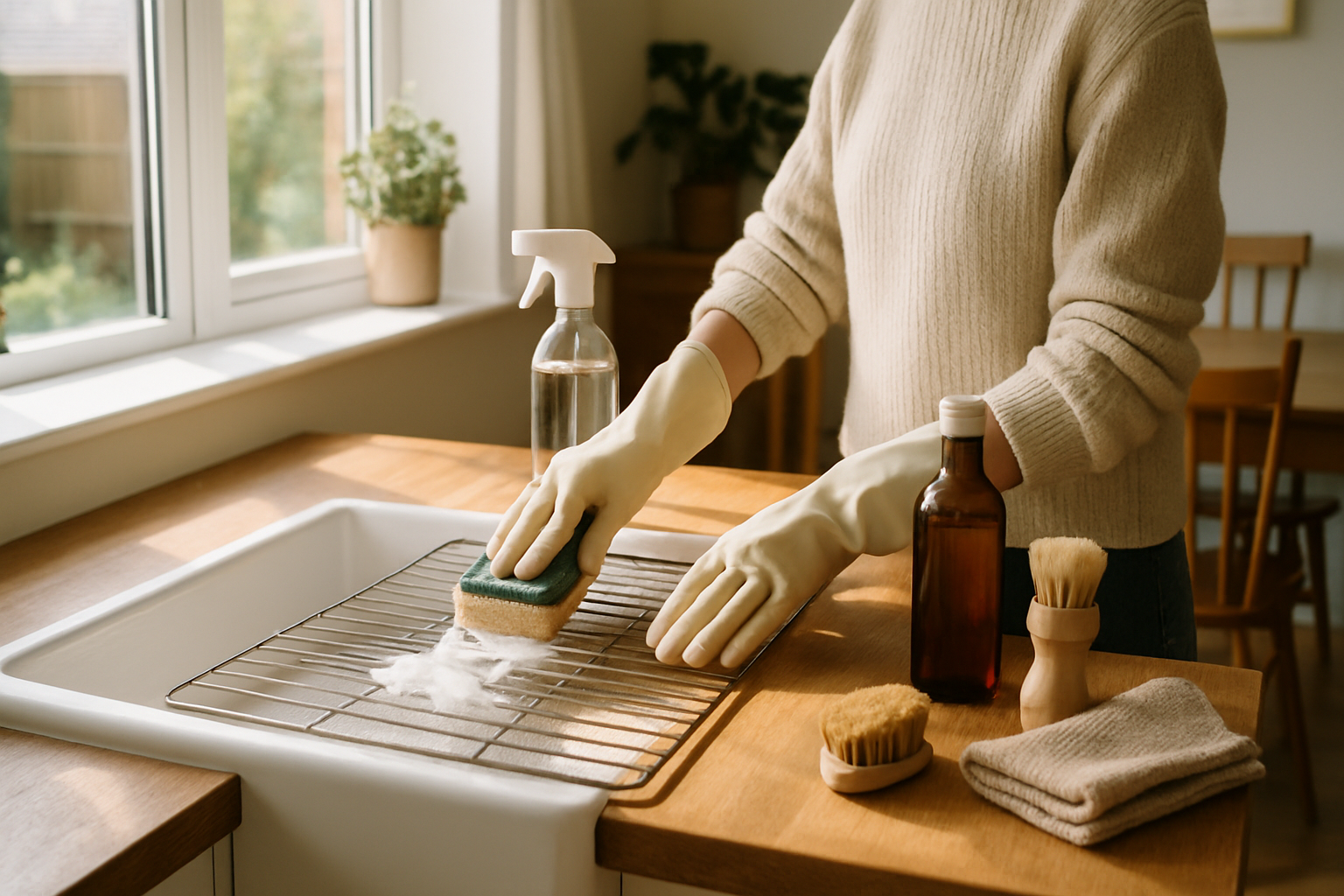
How to Clean Oven Racks Without Scrubbing
Quick Answer: The easiest way to clean oven racks without scrubbing is to soak them for 4–8 hours in hot water mixed with washing-up liquid and a dryer sheet, then wipe away loosened grease. Alternatively, a dishwasher-tablet soak or a bicarbonate-of-soda paste works equally well. Home methods cost under £3, while a professional oven clean in Essex or East London typically ranges £45–£90. Notably, baked-on carbon lifts overnight, so no hard elbow work is needed for most standard steel racks.
Oven racks are the worst part of any oven clean. The grease bakes on, hardens, and turns into a black crust. Scrubbing barely touches it. However, you do not actually need to scrub at all.
At Bansal’s Cleaning, we handle oven cleans across Basildon, Romford and Stratford every week. Over the years, therefore, we have tested nearly every no-scrub method going. Below are the ones that genuinely work.
Why scrubbing oven racks rarely works
Baked-on grease is not like a fresh spill. Instead, heat polymerises the fat into a hard, varnish-like layer. Carbonisation is the process where food residue and oil turn into solid black carbon under repeated high heat. Consequently, brushing that off by hand is nearly impossible.
Therefore, the trick is chemistry, not force. A good soak weakens the bond between the carbon and the metal beneath it. Once that hardened layer softens, residue lifts away with almost no pressure at all.
Importantly, aggressive scouring can also scratch coated racks. Those scratches then trap fresh grease next time. So a patient soak protects the rack surface too.
What you’ll need
Gather these items before you start. Notably, most of them already sit in your kitchen cupboard.
- A bath, large sink, or big storage tub
- Very hot water
- Washing-up liquid or a dishwasher tablet
- Three or four dryer sheets (tumble-dryer sheets)
- Bicarbonate of soda and white vinegar (optional)
- An old towel to protect surfaces
- A microfibre cloth for wiping
Bicarbonate of soda is a mild alkaline powder that breaks down grease and neutralises odours. White vinegar is a weak acid that reacts with it to lift residue. Together, therefore, they form a gentle, non-toxic cleaning combination.
Method 1: The dryer sheet bath soak
This ranks as my favourite technique for heavily greased racks. It sounds odd, yet dryer sheets genuinely help. Why does something built for laundry work on oven grease? The answer is simple chemistry, which we explain below.
First, line your bath with an old towel. This shields the enamel from scratches. Then lay the racks flat inside.
Next, place three or four dryer sheets on top. After that, squeeze a generous amount of washing-up liquid over everything. Finally, fill the tub with steaming water until each rack sits fully covered.
In addition, leave it overnight, or a minimum of four hours. In the morning, use the damp sheets themselves as your wiping cloth. Then watch the grime lift off in dark streaks.
Afterwards, rinse and dry thoroughly. No scrubbing needed.
Why dryer sheets work
Dryer sheets contain softeners and mild surfactants. Throughout the soak, therefore, these loosen the baked-on layer. In addition, the fabric provides gentle abrasion. So you get a light scouring effect without any real effort.
Method 2: The dishwasher tablet soak
If you have run out of dryer sheets, a dishwasher tablet makes a brilliant substitute. A dishwasher tablet is a compressed block of detergent, enzymes and rinse aid designed to cut through cooked-on food.
First, fill your sink or tub with boiling-hot water. Then drop in one tablet and let it dissolve completely. After that, lower each rack into the solution slowly.
Next, leave them for a few hours. Meanwhile, the enzymes break down the greasy film. Afterwards, simply wipe and rinse.
Notably, this route is fast and needs almost no attention from you. Therefore, it suits busy households in Brentwood or Canary Wharf who want a quick fix.
Method 3: The bicarbonate paste
For racks that will not fully submerge, make a paste instead. First, blend bicarbonate of soda with a splash of water until thick.
Then spread this paste across the whole rack. Let it sit for a few hours to soften the crust. After that, spray white vinegar over the top.
Consequently, the mixture fizzes as it reacts. That chemical reaction lifts loosened grime. Finally, buff clean with a damp cloth and rinse.
In particular, this option works well for people without a bath, or for a single stubborn patch.
Comparison: which no-scrub method suits you?
| Method | Best for | Soak time | Cost | Effort |
|---|---|---|---|---|
| Dryer sheet bath | Very greasy racks | 4–8 hrs | ~£1 | Very low |
| Dishwasher tablet | Quick results | 2–4 hrs | ~£0.30 | Very low |
| Bicarb & vinegar | No bath available | 3–4 hrs | ~£0.50 | Low |
| Professional dip tank | Extreme carbon | Same day | £45–£90 | None |
As the table shows, home tricks cost mere pennies. However, badly neglected racks sometimes demand a heated dip tank. That is precisely where a professional service earns its keep.
How do professionals clean oven racks?
Our team takes a rather different approach for stubborn jobs. Specifically, we remove the racks and lower them into a heated dip tank. A dip tank is a large heated bath of specialist detergent that dissolves carbon fast.
The high temperature accelerates the chemistry. As a result, racks that would occupy a household all night come out spotless within the hour. Meanwhile, we clean the oven cavity separately.
This matters hugely for end-of-tenancy cleans. A grimy oven, in particular, ranks among the top reasons landlords in Essex hold back deposits [Source: gov.uk Tenancy Deposit Protection]. Therefore, a proper oven clean often pays for itself.
Bansal’s Cleaning is an NHS Approved Supplier for several Essex hospitals, including Southend, Basildon and Broomfield. In addition, we are SafeContractor-approved and fully DBS-checked. So you know the people entering your home meet strict standards.
A simple no-scrub checklist
Follow these steps for reliable results every time.
- [ ] Protect your bath or sink with an old towel
- [ ] Lay racks flat and submerge them in steaming water
- [ ] Add washing-up liquid plus dryer sheets, or a dishwasher tablet
- [ ] Allow everything to soak for a minimum of four hours
- [ ] Wipe with the soaked dryer sheets or a microfibre cloth
- [ ] Rinse fully under clean water
- [ ] Dry completely to prevent rust
- [ ] Wipe bare steel with a little oil for protection
How to stop oven racks rusting
Water is the enemy after cleaning. Bare steel rusts quickly if left damp. Rust is iron oxide that forms when metal reacts with moisture and air.
First, dry each rack completely with a towel. Then set them somewhere warm to air off. For instance, a cupboard near a boiler works well.
Finally, wipe a thin layer of vegetable oil across any exposed metal. This creates a barrier against moisture. Notably, it is the same trick used for cast-iron pans.
Common mistakes to avoid
Even simple methods go wrong. Here are the errors we see most often.
Specifically, people reach for cold water. Cool taps barely soften grease at all. Therefore, always begin with the hottest water you can safely handle.
In addition, some folk rush things. Four hours is the minimum for heavy grime. Overnight, however, is far better. Patience does the work so your arms do not.
Also, avoid harsh wire wool on coated racks. It scratches the finish. Consequently, damaged coatings then attract fresh grease and rust faster.
When to call a professional
Home tricks handle most everyday grime. However, some situations still need expert help.
If your racks carry years of neglected carbon, for example, a soak may fall short. Likewise, if you are moving out and need a guaranteed finish, professional oven cleaning removes the risk. Importantly, our work carries a deposit-back guarantee for end-of-tenancy jobs.
We also cover full oven cleaning as part of our end of tenancy cleaning and deep cleaning services. In addition, you can book a standalone oven cleaning visit too.
For regular upkeep, our domestic cleaning team keeps kitchens on top of grease before it hardens. Prevention, therefore, beats scrubbing every time.
We serve homes across the region. See our pages for cleaning in Basildon, cleaning in Romford, and cleaning in Chelmsford. You can also read our oven cleaning tips blog for more ideas.
Notably, we hold £10M public liability insurance. So your home stays fully protected during every visit.
Frequently asked questions
Can I put oven racks in the dishwasher?
Some racks are dishwasher-safe, but many are too large or coated. Check the manufacturer guide first. A long soak in the bath is safer for most Essex kitchens.
How long should I soak oven racks?
Soak oven racks for at least 4 hours, ideally overnight. Hot water, washing-up liquid and a dryer sheet loosen grease so grime wipes away without scrubbing.
Will dishwasher tablets damage oven racks?
No. A dissolved dishwasher tablet in hot water is safe for most steel racks. Rinse thoroughly afterwards and dry to prevent rust spots forming.
Why do dryer sheets help clean oven racks?
Dryer sheets contain softening agents that loosen baked-on grease during a soak. They also add mild abrasion, so a light wipe removes residue without hard scrubbing.
How do I stop oven racks rusting after cleaning?
Dry racks fully with a towel, then leave them somewhere warm. A thin wipe of vegetable oil protects bare steel and prevents surface rust in humid weather.
Do professional cleaners clean oven racks separately?
Yes. Most oven specialists remove racks and soak them in a heated dip tank while cleaning the cavity. This delivers a deeper finish than home methods.
Ready for a spotless oven?
Skip the elbow grease entirely. Our DBS-checked, NHS Approved team handles ovens, racks and full kitchens across Essex and East London.
Call us today on 07424 330020 or message us on WhatsApp. We will get your oven gleaming and your weekend back.
Sources
- https://www.gov.uk/tenancy-deposit-protection
- https://bansalscleaning.com/oven-cleaning/
- https://bansalscleaning.com/end-of-tenancy-cleaning/
Reviewed by Sam Bansal, Operations Manager, Bansal’s Cleaning.