 Skip to content




Post-Renovation Cleaning Checklist for Essex Homes
Quick Answer: Post-renovation cleaning in Essex typically costs between £180 and £450 and takes 4 to 7 hours for an average two-bedroom home. The job removes fine construction dust, paint splatter, adhesive residue and debris left after building work. Importantly, it demands HEPA-filtered vacuums and surface-safe products, not ordinary household cleaning. Homeowners across Basildon, Chelmsford and Romford usually book a professional builders clean 24 to 48 hours after the last trade leaves, once dust has settled. This guide gives you a full room-by-room checklist.
Renovations look brilliant on completion day. The reality, however, is a film of dust over every surface. In particular, it hides in light fittings, skirting grooves and inside fresh cabinets.
Post-renovation cleaning refers to the specialist work carried out after building, plastering or refurbishment finishes. Specifically, it targets the fine particles and residue that standard wiping misses entirely.
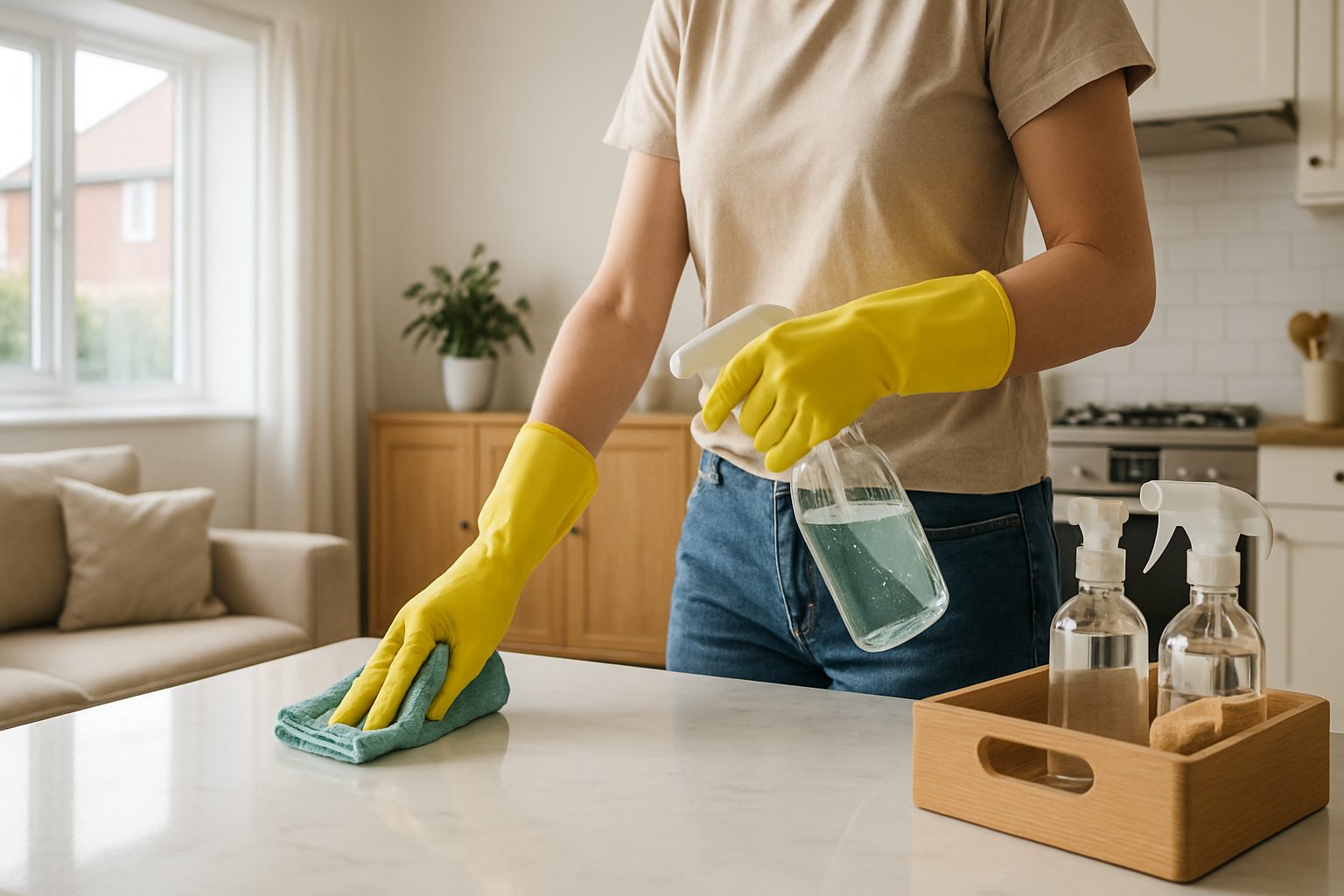
Fine plaster dust is the main difficulty after building work. Surfaces such as worktops can look perfectly clean while still holding a layer of dust that only shows up on a wipe with a cloth or glove, so a post-renovation clean has to be worked through methodically rather than judged by appearance.
Why post-renovation dust is different
Ordinary house dust is mostly skin cells, fabric fibres and pollen. Building site debris, however, is another beast entirely. Notably, it carries sharper edges and heavier weight. Therefore it behaves very differently once it settles.
Construction dust is a mix of plaster, silica, sawdust, paint particles and cement. It is finer, denser and far more abrasive than the everyday kind. Consequently, it scratches surfaces if you wipe carelessly. Importantly, the damage rarely shows until the light hits it from a certain angle. Therefore patience and the right cloth matter from the very first wipe. In addition, this dust travels far. You finish one room, shut the door, and a week later that grey film reappears. Consequently, working in the correct order matters enormously. Notably, the sequence you choose can save hours of repeated effort.
Our teams are SafeContractor-approved, which means we follow strict health and safety rules around silica particles. Importantly, fine silica poses a genuine respiratory hazard. Therefore proper masks and ventilation are not optional [Source: HSE Construction Dust Guidance].
How soon should you clean after renovation?
Timing trips people up. Book too early and you waste money. However, book too late and grit bonds firmly to your shiny new finishes.
You should hold off until every trade has packed up. That includes the electrician returning for that final socket. Then allow a day or two for airborne particles to drift down and settle. Importantly, this settling window is when most homeowners get impatient. However, rushing the timing almost always means cleaning the same surface twice. Therefore we always advise clients to wait for genuine completion first. Specifically, ventilate the property during this settling window. Therefore open windows wherever possible. However, keep doors between finished and unfinished rooms shut to limit spread.
Timing matters. If cleaning happens before every trade has finished, dust disturbed by the remaining work can settle on damp paint and newly finished surfaces, undoing the clean. It is worth confirming that all building, decorating and installation work is genuinely complete before the clean is booked in.
The complete post-renovation cleaning checklist
Work top to bottom and back to front. Gravity, after all, is your friend. Consequently, debris drops onto zones you tackle later.
Stage one: dry removal and debris
- Clear all rubbish, offcuts, packaging and protective sheeting.
- Sweep large pieces into bags before any wet work begins.
- Dry-dust ceilings, cornices and light fittings.
- Vacuum walls downward with a HEPA-filtered machine.
- Reach every crevice: skirting grooves, radiator backs, window tracks.
A HEPA filter is a high-efficiency particulate air filter that traps 99.97% of particles down to 0.3 microns. Notably, domestic vacuums lacking one simply pump grime straight back into the room.
Stage two: wet cleaning surfaces
- Wipe walls and ceilings where the finish allows.
- Clean all woodwork: doors, frames, skirting and architraves.
- Damp-wipe radiators, switches and sockets carefully.
- Lift paint splatter from glass and tiles with a safe scraper.
- Degrease and polish kitchen units inside and out.
Paint splatter on new glazing, including roof windows, often looks permanent but can usually be softened with warm soapy water and lifted with a plastic razor blade or scraper held at a shallow angle. Metal blades should never be used on glass, as they scratch the surface.
Stage three: floors last
- Vacuum all flooring thoroughly, including edges.
- Mop hard floors with the correct product for the material.
- Treat grout haze on new tiles.
- Clean and protect any natural stone.
Grout haze is the cloudy film left on tiles once grouting dries. Importantly, it needs a dedicated grout haze remover, not vinegar, which damages cement-based joints.
Room-by-room focus areas
Each room hides its own traps. Here, then, is where dust loves to lurk.
Kitchen
Have you checked behind the kickboards yet? Fresh units carry sawdust inside drawers and behind those panels. Importantly, run extractor fans only after cleaning, never during, or you spread particles further.
Bathroom
Silicone smears, grout haze and adhesive residue dominate here. The underside of new sinks and behind toilet bases gather the worst of it.
Living spaces and bedrooms
Light fittings, curtain poles and radiator fins gather the most. In addition, always inspect inside fitted wardrobes.
Tools you actually need
The right kit separates a proper builders clean from a quick wipe. So which items earn their place?
| Tool | Purpose | Why it matters |
|---|---|---|
| HEPA vacuum | Fine dust capture | Stops debris resettling |
| Microfibre cloths | Trapping particles | Won’t scratch surfaces |
| Plastic razor scraper | Paint and adhesive | Safe on glass and tiles |
| Grout haze remover | Tile film | Vinegar damages grout |
| Telescopic duster | High areas | Reaches ceilings safely |
| pH-neutral floor cleaner | Sealed floors | Protects new finishes |
A builders clean is the trade term for the deep clean performed after construction to clear dust, debris and residue. Notably, it differs from a routine domestic visit in both scope and equipment.
DIY versus professional: a quick comparison
| Factor | DIY clean | Professional clean |
|---|---|---|
| Time | 2 to 3 days | 4 to 7 hours |
| Dust control | Domestic vacuum spreads dust | HEPA filtration contained |
| Surface safety | Risk of scratches | Material-matched products |
| Cost | £30 in products | £180 to £450 |
| Insurance | None | £10M public liability |
For a single redecorated room, doing it yourself makes sense. However, for a full refurbishment, professionals save days. In addition, they shield expensive new finishes from damage.
Bansal’s Cleaning is an NHS Approved Supplier for Essex hospitals, including Basildon and Broomfield. Importantly, that accreditation reflects the hygiene and safety standards we apply in every home we enter.
What does post-renovation cleaning cost in Essex?
Price depends on three things: property size, debris volume and surface type. Here is how that plays out across the county. The surface type often surprises clients the most. Specifically, natural stone and quartz demand slower, gentler work. Therefore they add time, and time adds cost. A small Basildon flat after a bathroom refit might cost £180. A large Brentwood family home after a full extension, however, could reach £450 or more. In particular, heavy paint splatter and stone floors push the figure up. Notably, the more trades involved, the more residue we typically find. Therefore always describe the full scope when you ask for a quote.
In particular, ask whether the quote includes window interiors and inside cabinets. Some cheaper estimates exclude them. Then they add charges on the day.
Common mistakes that ruin new surfaces
Renovation finishes stay delicate for the first few weeks. Therefore caution pays. The same errors crop up again and again.
- Using abrasive pads on fresh worktops leaves micro-scratches.
- Vinegar on natural stone etches the surface permanently.
- Wiping walls before they fully cure can mark new paint.
- Cheap vacuums without HEPA recirculate fine grit.
- Skipping window tracks leaves visible gritty lines.
Abrasive scourers and harsh cream cleaners can permanently dull quartz and other engineered stone worktops, and that damage cannot usually be polished out afterwards. Check the manufacturer’s care guidance and use a soft cloth with a pH-neutral cleaner rather than anything abrasive.
How do you keep dust down after the clean?
Even a flawless result fails if fresh particles keep emerging. Specifically, they creep out from unfinished cavities or newly laid flooring. Therefore the first fortnight matters far more than people expect. A little maintenance now prevents a second deep clean later. Notably, the dust that escapes early is the dust that resettles everywhere. Therefore, change your boiler or HVAC filters once major works wrap up. In addition, wipe surfaces with a damp microfibre cloth for the first fortnight. Importantly, keep windows open on dry days to clear any lingering haze. After all, grit hides in skirting gaps and slowly works loose.
Booking the right service in Essex
Choose a team that understands renovation residue, not just routine tidying. Therefore check accreditations and insurance before you commit.
Our cleaners are DBS-checked, fully insured and trained in surface-safe methods. In addition, we cover Basildon, Chelmsford, Brentwood, Romford, Ilford and the wider East London area.
Learn more about our end of tenancy cleaning and deep cleaning services. For renovation work specifically, see our after builders cleaning page.
We also serve specific areas. Browse cleaning in Basildon, cleaning in Chelmsford and cleaning in Romford.
For seasonal tips, read our spring cleaning guide and our advice on removing tough stains.
Frequently asked questions
How much does post-renovation cleaning cost in Essex?
Most Essex post-renovation cleans range from £180 to £450, depending on property size and debris level. A small Basildon flat sits at the lower end, while a large Chelmsford house after a full refurb costs more.
How long does a post-renovation clean take?
A typical two-bedroom home takes 4 to 7 hours. Larger properties with heavy dust or paint splatter can take a full day, sometimes split across two visits for deep results.
What is the difference between a builders clean and a deep clean?
A builders clean removes construction dust, debris and residue after works. A deep clean focuses on existing grime in a lived-in home. The two need different equipment and timescales.
Can I clean after renovation myself?
Yes, but fine construction dust settles for days and clogs domestic vacuums. Professional teams use HEPA filtration and the right products to avoid scratching new surfaces.
How soon after building work should I book a clean?
Wait until all trades have finished and major dust has settled, usually 24 to 48 hours after the last works. Booking too early means dust simply resettles.
Ready to reveal your finished renovation?
Don’t let weeks of dust spoil a beautiful refurbishment. Our trained, insured teams handle the hard part while you enjoy the result.
Call 07424 330020 or message us on WhatsApp for a fast quote across Essex and East London.
Reviewed by Sam Bansal, Operations Manager.
Sources
- https://www.hse.gov.uk/construction/healthrisks/hazardous-substances/construction-dust.htm
Related reading: For our complete 2026 guide, see What Inventory Clerks Actually Photograph at Check-Out (Essex 2026).
Rather hand the dust to professionals? Our after builders cleaning in Essex team brings HEPA-filtered vacuums and a snag-ready finish — from £27 per hour, with a free fixed quote from a photo or video walkthrough.